How to Choose Your First Crystal: A Beginner's Guide

Table of Contents
Start with Your Intention, Not the Stone
Best Crystals for Beginners: Where Most People Start
Clear Quartz: The Blank Canvas
Amethyst: Calm and Clarity
Rose Quartz and Black Tourmaline: Two Common Starting Points
How to Choose a Crystal for Your Needs
Match the Crystal to the Feeling You Want
When Intuition and Logic Disagree
What to Look for When Buying Your First Crystal
Authenticity: Spotting Dyes, Glass, and Repairs
Ethical Sourcing and What Questions to Ask
Buying Online Without Getting Burned
How to Cleanse Crystals Before You Use Them
Budget, Care, and Safety for Your First Crystal
What First Crystals Actually Cost
Care: Storage, Cleaning, and What Damages Stones
Safety: What Actually Matters
Conclusion: Let Your First Crystal Meet You Where You Are
Frequently Asked Questions
Last Updated: October 7, 2026
Start with Your Intention, Not the Stone
A crystal is a naturally formed mineral solid with a repeating internal structure. People use crystals as physical anchors for intention: the stone reminds you of a feeling or goal.
The people who leave happy are not the ones who found the "rarest" stone. They are the ones who arrived knowing what they needed.
So before you touch anything, answer one question:
What do I want to feel more of right now?
What do I want to release?
Write it down. That sentence becomes your filter for everything else in this guide.
Pro Tip If you cannot name a feeling, start with "grounding." It is the most common starting point for beginners and pairs with almost every other intention later.
Best Crystals for Beginners: Where Most People Start
The best crystals for beginners are clear quartz, amethyst, rose quartz, and black tourmaline, widely available, easy to care for, and each covering a different basic need.

Clear Quartz: The Blank Canvas
Clear quartz is a transparent to translucent silicon dioxide mineral and the most versatile stone in the beginner's toolkit, a blank canvas that takes on whatever intention you give it. It is also one of the most affordable ways to start. Pick up a small tumbled piece and see how it feels in your hand.
Amethyst: Calm and Clarity
Amethyst is the purple variety of quartz, colored by trace iron, and the classic choice for stress, racing thoughts, or trouble winding down at night. A common mistake is buying the biggest cluster on the shelf: a small piece you keep on your nightstand beats a showpiece that lives in a drawer.
Rose Quartz and Black Tourmaline: Two Common Starting Points
Rose quartz is a pink stone traditionally linked with self-worth and gentle emotional healing, and a frequent first pick for anyone moving through grief or a hard season.
Black tourmaline is a dark, opaque stone often chosen for protection and grounding. Many people keep a piece near a front door or on a work desk.
Crystal | Color | Common Use | Best For |
Clear quartz | Clear or white | Amplifying intention | Anyone unsure where to start |
Amethyst | Purple | Calm, rest, clarity | Stress and sleep |
Rose quartz | Pink | Self-worth, gentle healing | Grief and hard seasons |
Black tourmaline | Black | Protection, grounding | Busy or draining spaces |
How to Choose a Crystal for Your Needs
Learning how to choose a crystal for your needs comes down to one rule: match the stone to the feeling, not the trend. If you want calm, you are looking at amethyst, not whatever was popular online this month.
Match the Crystal to the Feeling You Want
Start with the feeling, then work backward to the stone. This keeps you from buying something that looks nice but does nothing for you.
Want calm? Amethyst or blue lace agate.
Want grounding? Black tourmaline, hematite, or smoky quartz.
Want self-worth? Rose quartz or rhodonite.
Write your feeling on a note before you shop. When two stones pull at you equally, the note breaks the tie.
When Intuition and Logic Disagree
Your head and your gut will sometimes point at different stones. If logic says amethyst but your hand keeps drifting to rose quartz, buy the rose quartz, the stone you keep picking up is the one you will actually use. The one exception is budget: never let a gut pull talk you past what you can comfortably spend.
Watch Out Do not buy a stone just because a stranger on the internet called it "rare" or "high-vibration." Rarity has no bearing on whether a crystal suits your intention, and it is often used to justify a higher price.
What to Look for When Buying Your First Crystal
Buying in person beats buying blind online, especially for a first crystal: you can hold the stone, check it in daylight, and ask where it came from. If you shop online, buy from a seller who answers sourcing questions in writing and lists the stone's actual name rather than a trade nickname.
Authenticity: Spotting Dyes, Glass, and Repairs
Most first-crystal mistakes are not counterfeits but treated stones sold as natural, glass sold as quartz, or repaired stones sold as whole. A few checks catch most of them:
Check the color against the fracture. Dye pools in cracks, so on a dyed agate or quartz the color is darkest along internal fractures and lighter in the solid body; natural color is usually the reverse.
Look for a dye line at the base. Many dyed tumbled stones show a faint band of concentrated color where the stone sat against the grinding wheel.
Test hardness with a known reference. Quartz (clear quartz, amethyst, rose quartz) sits at 7 on the Mohs hardness scale, so it will scratch window glass; calcite, selenite, and fluorite will not.
If a price seems too good for a large, flawless piece of a normally included or cloudy stone, it usually is. A flawless two-inch clear quartz point at a flea-market price is more likely glass than a bargain.
Watch Out "Rare," "AAA grade," and "high-vibration" are marketing terms, not standards. There is no universal grading body for crystals sold in the United States, so any grade label is the seller's own. Judge the stone, not the sticker.
Ethical Sourcing and What Questions to Ask
Ethical sourcing means the stone was extracted and traded without harming workers, communities, or the land.
Ask these before you buy:
Which country was this stone mined in?
Do you buy from a supplier you have met, or through a wholesale marketplace?
Was this stone cut and polished near where it was mined, or shipped elsewhere first?
A seller who cannot answer any of these is one to walk past. At Wholistic Earth, we hand-select our crystals and botanicals and are glad to talk through where a piece came from.
Some materials carry well-documented sourcing concerns. Cobalt-bearing minerals, for example, are tied to mining conditions in the Democratic Republic of the Congo that have drawn sustained attention from labor and human-rights organizations.
For broader context on how minerals move through global supply chains, the U.S. Geological Survey mineral commodity information is a useful starting point.
Buying Online Without Getting Burned
If you cannot shop in person, a few habits reduce risk:
Buy from a seller who photographs the exact stone you will receive, not a stock image.
Look for listings that name the mineral species, not just a trade name.
Prefer sellers who disclose treatments in the listing.
The stone in the photo should be the stone in the box. If a listing reuses one photo for multiple pieces, you are buying a category, not a crystal.
How to Cleanse Crystals Before You Use Them
Cleansing a crystal means clearing any lingering energy before you work with it. Pick one method that suits the stone:
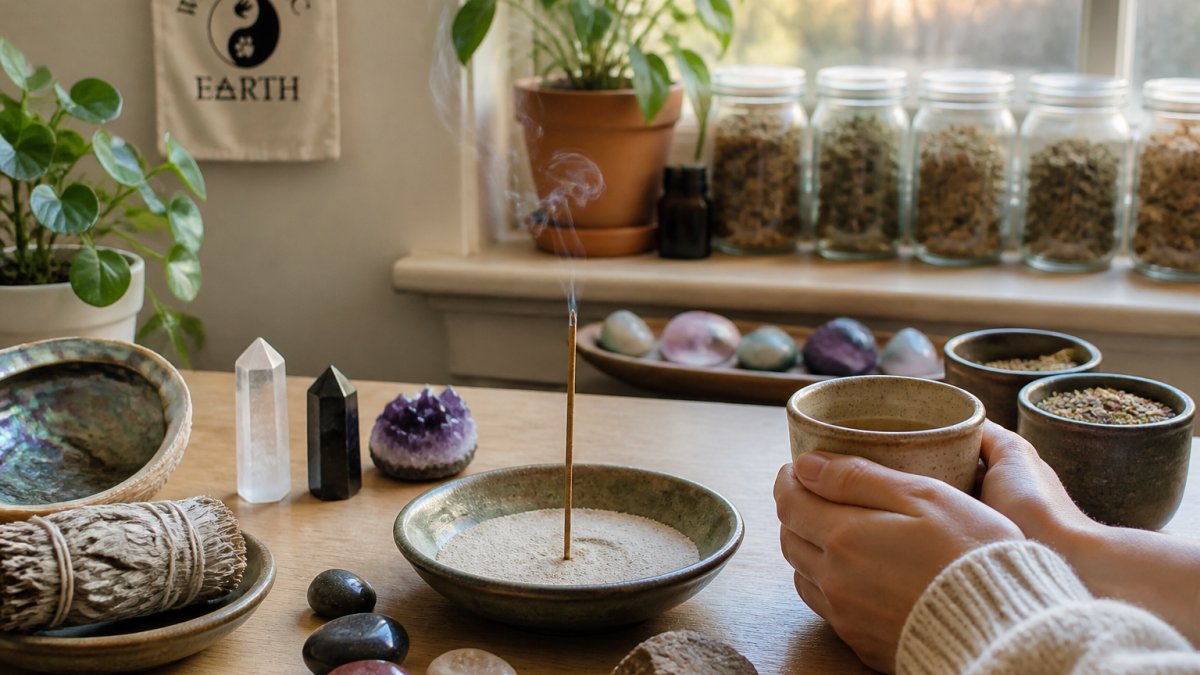
Smoke: Pass the crystal through the smoke of dried herbs or resin.
Sound: Ring a singing bowl or chime near the stone.
Moonlight: Leave it on a windowsill overnight during a full moon.
A common mistake is soaking every stone in water: some minerals, including selenite and halite, will dissolve or flake. When in doubt, use smoke or sound. Cleanse a new crystal before first use, then repeat whenever it feels heavy or dull, there is no fixed schedule.
Key Takeaway The safest cleansing methods for beginners are smoke, sound, and moonlight. They work on every stone and carry zero risk of water damage.
Budget, Care, and Safety for Your First Crystal
You do not need to spend much to start. A small tumbled stone is a perfectly good first crystal, and what you spend should follow what you want to do with the stone, not the other way around.
What First Crystals Actually Cost
Prices vary by stone, size, and seller, so treat these ranges as general expectations rather than fixed quotes:
Tumbled stones (roughly 1 inch): commonly a few dollars each, the lowest-risk way to start.
Small raw pieces and points (2-3 inches): often in the low tens of dollars for common stones like clear quartz, amethyst, and rose quartz.
Polished spheres and larger clusters: frequently in the tens to low hundreds of dollars, depending on size and quality.
A useful rule: your first crystal should cost less than a nice dinner. If a seller pushes you toward a large piece on your first visit, that is a sales tactic, not guidance.
Care: Storage, Cleaning, and What Damages Stones
Care comes down to hardness and light sensitivity, both predictable once you know the stone.
Hardness. On the Mohs scale, quartz-family stones (clear quartz, amethyst, rose quartz) sit at 7 (Natural Gemstones).
Light. Amethyst, rose quartz, and several other colored stones can fade with prolonged direct sunlight.
Cleaning. Dust with a soft, dry cloth; for most stones, a barely damp cloth is fine.
Water. This is the most common beginner mistake.
Safety: What Actually Matters
Three points are worth taking seriously:
Choking and ingestion. Small tumbled stones are a choking hazard for young children and can cause intestinal blockage if swallowed by a pet. Keep them away from kids and from dogs or cats that chew.
Toxicity of raw or dusty material. Malachite, cinnabar, realgar, and orpiment are examples where raw or dusty handling is a genuine concern. Polished pieces are lower risk, but wash your hands after handling raw material, and do not grind, sand, or cut stones without proper protection.
Elixirs and ingestion. Do not make or drink "crystal water" from an unknown stone, since soluble or toxic minerals can leach into water. If you want a stone near a drink, keep it outside the glass.
Crystals are not a substitute for medical or mental health care. If you are working through grief or a health concern, use your crystal alongside professional support, not instead of it.
For anyone weighing natural products alongside conventional care, the National Center for Complementary and Integrative Health publishes plain-language guidance worth reading.
Key Takeaway Budget: start under the price of a dinner. Care: match storage to hardness and keep colored stones out of constant sun. Safety: no soaking unknown stones, no crystal water, and keep small pieces away from kids and pets.
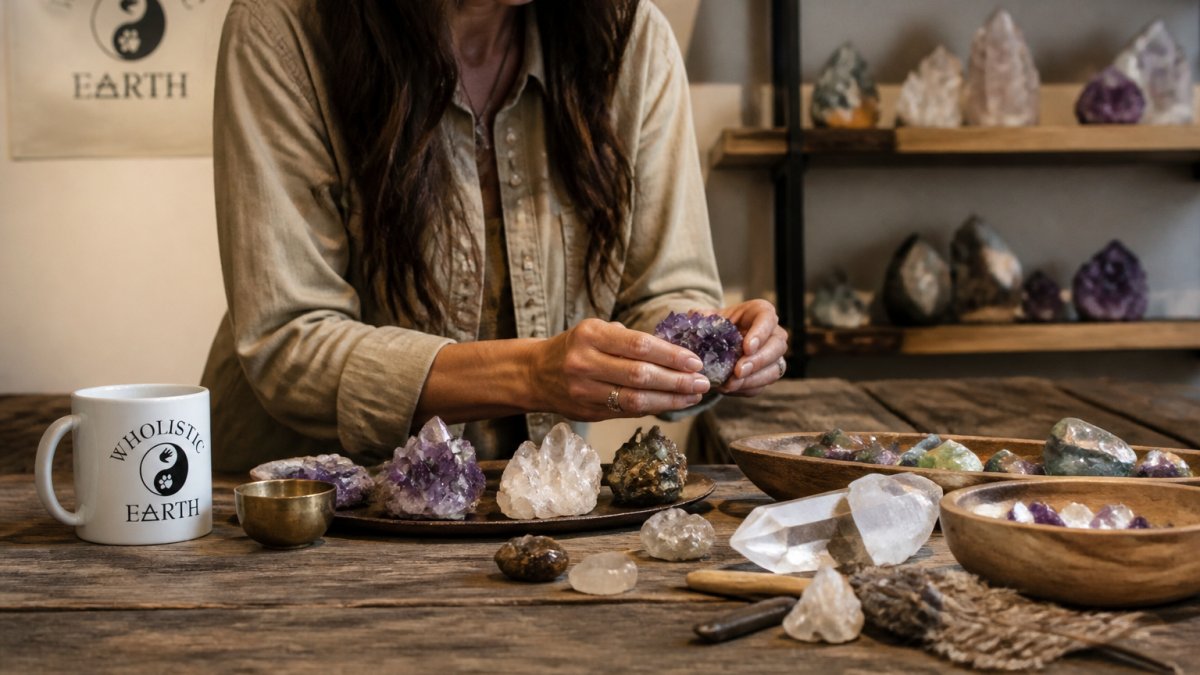
If you are local, stop in and hold a few pieces in person. Feeling a stone in your hand tells you more than any product photo can.
Best For Anyone who wants to hold a stone before buying, ask sourcing questions face to face, and get guidance without pressure.
Conclusion: Let Your First Crystal Meet You Where You Are
The hardest part of choosing a first crystal is trusting that you are allowed to start small and start unsure.
That is the entire process, and it works whether you are brand new or returning after years away.
Wholistic Earth is here to help you take that first step.
Get started with Wholistic Earth and find the stone that meets you where you are. Contact us today.
Frequently Asked Questions
How do I choose the right crystal for me?
Start with what you want the crystal for. If you want calm, look at amethyst. If you want grounding, black tourmaline or smoky quartz are common picks. Then hold a few options and notice which one your hand keeps returning to. That pull matters more than matching a perfect list. If you are shopping online, read the description and let your gut respond to the photo.
Should I choose a crystal by intuition or by its properties?
Both work, and they often agree. Properties give you a starting point, like knowing rose quartz is associated with heart-centered energy. Intuition tells you which one feels right in your hand. If you are new, use properties to narrow the field to three or four stones, then let intuition pick from there.
How can I tell if a crystal is authentic?
Look for natural imperfections. Real stones usually have small internal fractures, color variation, or tiny inclusions. Uniform color and a glassy, bubble-filled look can mean dyed glass or resin. If a piece is repaired, the break line is often visible under bright light. Ask the seller directly about treatments and repairs. A shop that answers honestly is a good sign.
How do I cleanse and care for a new crystal?
For stones that should not get wet, like selenite or malachite, use sound instead: ring a singing bowl or chime near the stone for a few minutes. You can also leave it in moonlight overnight. Repeat cleansing whenever the crystal feels heavy or dull, or after someone else handles it.
This article is for general informational purposes and is not medical advice. Consult a qualified healthcare provider for any health concern.
Contact Us

Comments